Protein in your urine is one of the earliest signals that the kidneys are under strain, and it usually shows up long before you feel anything at all. That is exactly why it matters, and why I would rather explain it clearly than have you wait until symptoms arrive.
Healthy kidneys filter waste out of the blood while keeping useful things, including protein, inside. When protein starts crossing into the urine, it means the filters are not holding as tightly as they should. The medical term is proteinuria, or albuminuria when the protein in question is albumin, which is the one we measure most often.
Here is what the result means, what causes it, and what actually changes the outcome.
This article is educational and does not replace an evaluation by your own physician.
What the kidney filters actually do
Each kidney holds around a million tiny filtering units called nephrons. Inside each one, a cluster of small blood vessels called the glomerulus works like a very selective sieve: water and waste pass through into what will become urine, while blood cells and proteins are too large to cross and stay in the bloodstream.
When those filters are damaged or inflamed, the sieve becomes leaky. Albumin, the most abundant protein in blood, is usually the first to slip through. That is why finding albumin in urine is such an early and useful marker: it detects a change in the filter itself, often years before the kidneys’ overall filtering capacity drops enough to raise creatinine.
Reading your test results
Three different tests can report this, and they are not interchangeable.
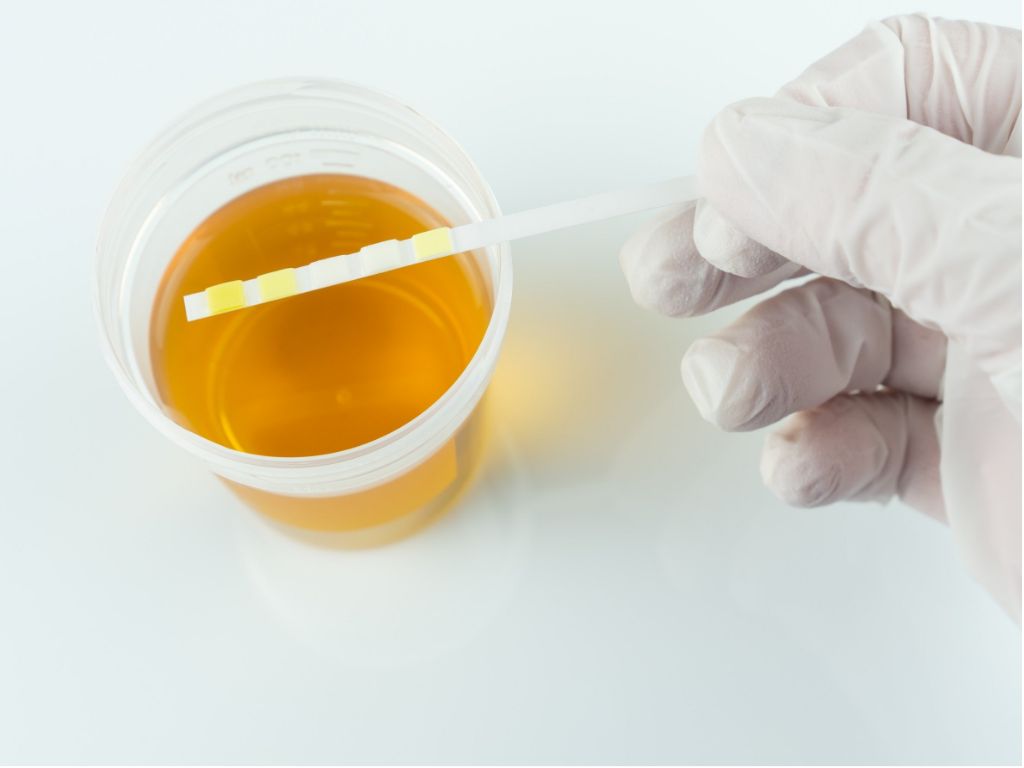
Dipstick (urinalysis). A quick screening test that reports protein as negative, trace, 1+, 2+, 3+ or 4+. It is convenient but rough: it misses small amounts of albumin, and it can read falsely high in very concentrated urine. A positive dipstick is a reason to test properly, not a diagnosis.
Urine albumin-to-creatinine ratio (UACR). The test that matters most, done on a single urine sample, usually the first of the morning. Results are read as:
- Under 30 mg/g is normal
- 30 to 300 mg/g is moderately increased albuminuria, what used to be called microalbuminuria
- Above 300 mg/g is severely increased albuminuria
24 hour urine collection. Less common now that UACR is reliable, but still used in specific situations. Protein loss above roughly 3.5 grams per day is called nephrotic range and points toward glomerular disease.
One point I emphasize with every patient: a single abnormal result is not a diagnosis. Protein in urine fluctuates. Before concluding anything, we confirm it on at least two of three samples over about three months.
What causes protein in urine
Diabetes. The leading cause worldwide. Persistently high blood sugar damages the small vessels in the glomerulus, and albumin in the urine is often the first measurable sign of diabetic kidney disease.
High blood pressure. Sustained pressure damages the same small vessels. This works in both directions, because kidney damage also raises blood pressure, and the cycle accelerates unless it gets interrupted.
Glomerular disease. A group of conditions in which the filters themselves become inflamed or scarred. These often produce larger amounts of protein and need specific treatment.
Autoimmune disease. Lupus in particular can affect the kidney directly, and proteinuria is frequently how lupus nephritis is first detected.
Preeclampsia. In pregnancy, new high blood pressure with protein in the urine after 20 weeks requires prompt obstetric evaluation.
Temporary causes. Fever, intense exercise, severe dehydration, cold exposure and acute illness can all produce protein in urine that disappears once the trigger resolves. This is common and benign, and it is another reason to repeat the test rather than act on one result.
Medications. Certain drugs, including regular use of nonsteroidal anti inflammatories, can affect the kidney. Bring your full medication list, including over the counter products and supplements, to your appointment.
Symptoms, and why there usually are none
In the early stages, proteinuria produces no symptoms whatsoever. None. This is the single most important thing to understand about it, and the reason screening exists for people at risk.
When protein loss becomes substantial, signs may appear:
- Foamy urine, persistent and fine, that lingers rather than clearing right away
- Swelling in the ankles, feet, hands or around the eyes, often worse in the morning
- Unexplained weight gain from fluid retention
- Fatigue and reduced appetite
About foam specifically, since it is what brings many people to search in the first place: a forceful stream produces bubbles, and so do cleaning products in the bowl. Those large bubbles pop quickly. The foam that concerns me is fine, persistent and slow to disappear. Either way, it is a reason to test, not a conclusion.
Who should be screened
Testing for albumin in the urine should be routine, at least once a year, if you have:
- Diabetes, type 1 or type 2
- High blood pressure
- A family history of kidney disease
- Cardiovascular disease
- Lupus or another autoimmune condition
- Obesity
- Age over 60
If you belong to any of these groups and have never had a UACR done, ask for it. It is inexpensive, it needs only a urine sample, and it detects a problem at the stage where treatment works best.
Treatment: what actually changes the outcome
Protein in urine is not treated on its own. What gets treated is the cause and the mechanism, and the good news is that the tools we have work well.
ACE inhibitors and ARBs. These blood pressure medications do something extra: they lower the pressure inside the glomerulus specifically, which reduces protein loss beyond what their effect on blood pressure alone would predict. They are the cornerstone of treatment for proteinuria in diabetes and hypertension.
Blood pressure control. Targets are individualized, but tighter control clearly slows progression when protein is present.
Blood sugar control. In diabetes, sustained glucose control reduces albuminuria and protects the filters.
SGLT2 inhibitors. A newer class, originally for diabetes, that has been shown to protect the kidney and reduce protein loss, including in some people without diabetes. Whether they fit your case is a conversation to have with your physician.
Dietary sodium reduction. Lowering salt improves blood pressure control and makes the medications above work better.
Moderating protein intake. Not eliminating it. Very high protein diets increase the filtering load. This should be individualized rather than self prescribed, because too little protein carries its own problems.
Medication review. Identifying and stopping a drug that is contributing is sometimes the entire treatment.
Not smoking. Smoking accelerates kidney damage and undoes much of the benefit of everything above.
Why early detection changes everything
Chronic kidney disease is quiet. A person can lose a substantial share of kidney function without a single symptom, and by the time fatigue, swelling or nausea appear, the damage that produced them is largely permanent.
Protein in urine is the exception to that silence. It is measurable, it is cheap to check, and it appears early enough that treatment can meaningfully change where things go from here. In diabetic kidney disease, catching albuminuria in the moderately increased range and treating it properly can slow progression for years.
That is the whole argument for testing: not because protein in urine is an emergency, but because it is a window that closes.
When to see a nephrologist
Consider a kidney specialist when:
- Protein is confirmed on repeat testing
- The UACR is above 300 mg/g
- Protein appears together with blood in the urine
- Creatinine is rising or estimated filtration rate is falling
- Swelling is present
- You have diabetes or lupus with new proteinuria
- The cause has not been identified
Talk to a nephrologist in Santo Domingo
I am Dr. Elizabeth Villanueva, a nephrologist and internist practicing in Santo Domingo, Dominican Republic. Much of my work is with people who were told their urine test was abnormal and left the appointment without understanding what that meant or what to do next.
If your results show protein and no one has explained the cause, bring the report and any earlier results to a consultation. Prevention is genuinely the point here: what we do at this stage is what determines the next twenty years of kidney function.
Request an appointment or read more about how I work.